

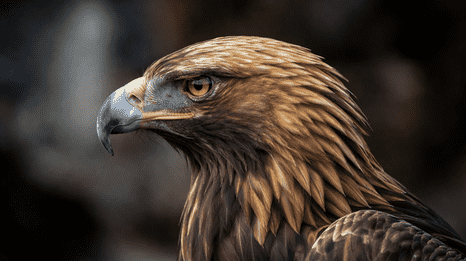
For a decade, the crags of the Lake District have been completely silent. The last native golden eagle died there in 2016, ending a fractured lineage that clung to survival against heavy odds. That ten-year absence might soon come to an end.
The British government has approved a £1 million funding package to explore the active reintroduction of these iconic birds. Environment Secretary Emma Reynolds officially signed off on the budget following a detailed feasibility study. Forestry England published the study, confirming the country still has the capacity to sustain wild populations.
Officials view this financial commitment as a step in a broader conservation strategy. The goal is to restore a missing piece of the nation’s natural identity while bringing back a top upland predator.
Reynolds stated the funding will help build local partnerships across the northern region. “This government is committed to protecting and restoring our most threatened native wildlife,” Reynolds said. “Backed by £1 million of government funding, we will work alongside partners and communities to make the golden eagle a feature of English landscapes once again.”
A legacy of Victorian persecution
Golden eagles were once a widespread fixture across the English countryside. William Shakespeare mentioned the raptors more than 40 times in his plays. Few English birds carry that kind of cultural weight.
Yet, cultural reverence did not protect them from the rapid expansion of agriculture and private estates. During the Victorian era, the birds faced severe and systematic persecution. Gamekeepers managing lucrative grouse moors and farmers protecting valuable livestock viewed the raptors as direct economic threats. They actively hunted the eagles and removed their eggs from nests.
This intense pressure proved too much for the species to withstand. For more than 150 years, golden eagles have been functionally extinct in England. Restoring them requires reversing generations of ecological damage using tested scientific methods.
To bring the species back, conservationists will look closely at a successful model operating just north of the border. The South of Scotland Golden Eagle Project launched in 2018 with a clear mission. At its inception, the entire southern Scottish region held just three or four breeding pairs.
The Scottish blueprint for recovery
Project leaders utilized a specific method to boost local numbers safely. They took single chicks from established broods of two in the northern Scottish Highlands. These chicks, selected at six to eight weeks old, were moved to highly monitored southern release sites.
To ensure the birds remained wild, field teams fed the juveniles remotely. This minimized human contact before the birds took their first independent flights. Food was continually provided until the juvenile eagles learned to hunt entirely on their own.
This approach yielded strong results over the years. The southern Scottish population has now grown to more than 50 — up from just three or four breeding pairs a decade ago. The charity Restoring Upland Nature (RUN) will lead the English project, aiming to replicate this exact success.
Dr. Cat Barlow, Chief Executive of RUN, highlighted the importance of replicating this cooperative framework. “Our success to date is testament to the strength of collaborative working between conservationists, raptor study groups, gamekeepers and land managers,” Barlow said. “With the backing of Defra and Forestry England, we now have the opportunity to replicate and build on this approach in Northern England.”
Finding habitat and local food
Finding adequate space for Britain’s second-largest bird of prey is a major logistical hurdle. Forestry England researchers successfully identified eight distinct recovery zones. Most of these prime locations sit firmly in the remote uplands of northern England.
Golden eagles possess a two-meter wingspan and require vast hunting territories to sustain themselves. Because of this, some questioned whether modern, fragmented English habitats hold enough food to support an apex predator. However, wildlife experts expressed confidence in local food availability.
The eagles are highly adaptable hunters that rely on a diverse diet to survive. They frequently hunt medium-sized mammals and other upland birds, which remain plentiful in the targeted northern zones.
Duncan Orr-Ewing, head of species and land management at the RSPB, backed up the local food web data. “The main prey of golden eagles are things like grouse, rabbits, hares,” Orr-Ewing explained. “But they can also take other things like deer calves, we’ve seen badgers, fox cubs… So I don’t think prey availability is going to be a problem.”
Engaging rural upland communities
Physically moving the birds is only one part of a complex reintroduction process. Any official release must follow guidelines set by the France-based International Union for Conservation of Nature (IUCN). Furthermore, the English project will require formal licensing from Natural England.
Establishing trust with local stakeholders is a stated priority for the government. A Defra spokesperson confirmed the program would look at public engagement as a next step. They also stated the project would actively consider the impact on other native species and the wider environment.
The newly allocated £1 million funding will finance both scientific planning and community outreach. While there is no public breakdown of how this money is divided, conservation teams will develop an engagement plan. They must consult directly with farming, game management, and tourism sectors.
Mike Seddon, Forestry England Chief Executive, acknowledged this core social requirement. “The detailed findings of our feasibility study will guide us with our partners, Restoring Upland Nature,” Seddon noted. “This Defra funding means we can build on the good work we have begun, taking the time to build support and engage with local communities.”
A broader national rewilding effort
The golden eagle initiative fits into a larger national strategy regarding biodiversity. The government is working to achieve statutory targets to halt the decline in species abundance by 2030. They also aim to reduce the overall species extinction risk by 2042 against 2022 levels.
Reintroducing keystone species is a primary tactic to meet these environmental goals. Last year, officials made a landmark decision to allow the legal reintroduction of Eurasian beavers. Following that approval, the first legally sanctioned pair was set free in Dorset this past March.
Other active rewilding projects have paved the way for the eagles. In 2022, conservationists released three European bison into a Kent woodland. The herd has already expanded to six, naturally managing and shaping the forest environment.
The most prominent historical success remains the red kite. Driven out of England by the 1980s, birds from Wales and Spain were released in the Chiltern Hills starting in 1990. Today, England hosts an estimated 2,000 breeding pairs scattered across the country.
Analysis: The timeline to recovery
Despite the new funding and proven Scottish methods, a fully restored golden eagle population remains a distant goal. Satellite tracking shows that some Scottish birds have already begun crossing the border to explore northern England. However, converting transient visitors into permanent residents requires stable habitats.
Forestry England projects that Scottish birds could become a regular sight across northern England within 10 years. Still, waiting for breeding pairs to establish themselves on English soil and rear native chicks will take significantly longer.
The return of an apex predator changes how the local ecosystem works from the top down. It demands a high level of tolerance from the humans who manage the land below. The scientific blueprints are already drawn, and the immediate financial backing is secured.
Ultimately, returning the golden eagle is no longer just a biological challenge, but a matter of sustained political and social will. The groundwork is complete. The next decade will prove if the uplands are ready to sustain their natural balance.