

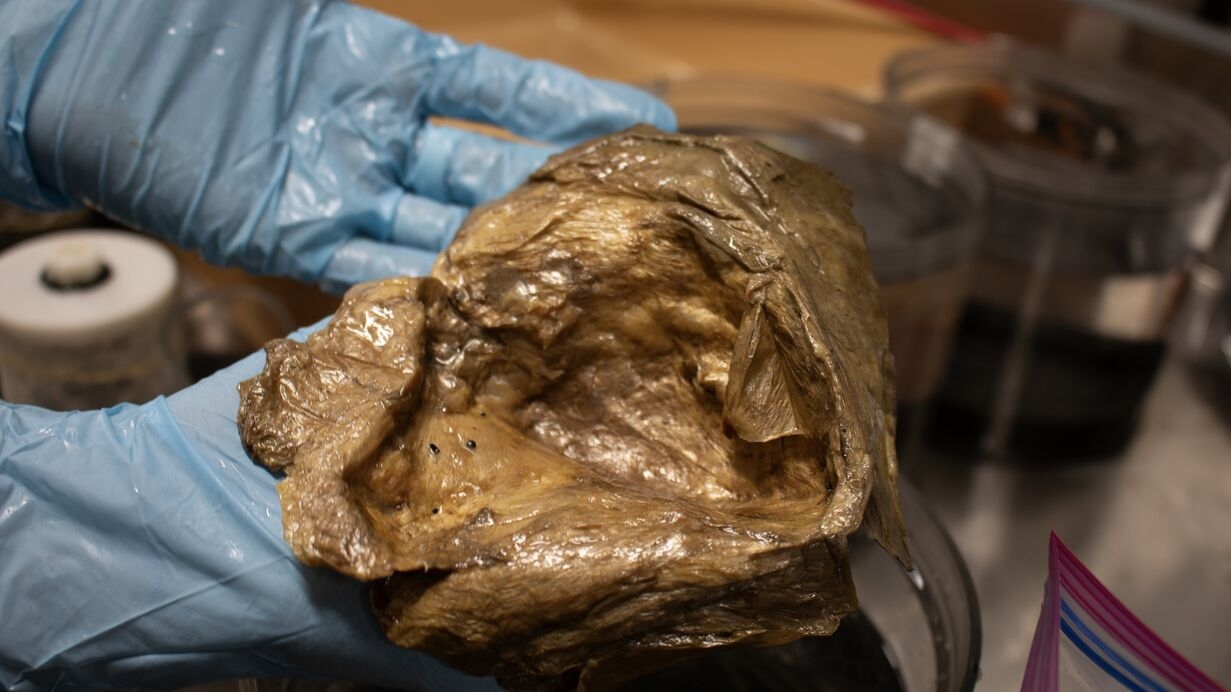
Genetic sequencing reveals the object collected at a depth of 3,250 meters is a biological remnant of a deep-sea anemone.
According to a report published by the National Oceanic and Atmospheric Administration (NOAA) on April 22, 2026, scientists have determined that a “golden orb” found in the Gulf of Alaska is a remnant of dead cells from a giant deep-sea anemone. Allen Collins, zoologist and director of NOAA Fisheries’ National Systematics Laboratory, led the identification effort alongside colleagues at the Smithsonian National Museum of Natural History.
The object was found at a depth of 3,250 meters, which equates to more than two miles below the ocean surface. Researchers established that the golden material formed at the base of the anemone species Relicanthus daphneae, specifically the part of the animal that anchored it to the rock substrate.
The NOAA release noted that the discovery had attracted a lot of speculation and public interest since the object was collected two and a half years ago.
The initial encounter
In 2023, during NOAA’s Seascape Alaska 5 expedition, the remotely operated vehicle Deep Discoverer was surveying a rocky outcropping on the seafloor. Launched from the NOAA Ship Okeanos Explorer, the vehicle’s cameras captured a strange, golden, mound-shaped object with a distinct hole in it, stuck to a rock.
Scientists watching the live feed were puzzled. They debated whether the object was an egg case or a dead sponge, and questioned whether something had crawled into it, or out of it.
Encountering unrecognized organisms during these expeditions is common, and most such puzzles are resolved quickly as scientists pool their knowledge. However, this specific discovery turned into a complex puzzle. The expedition team collected the orb using a suction sampler and transferred it to the Smithsonian National Museum of Natural History for examination and further study.
Morphological and genetic analysis
Identifying the orb required a multi-year effort combining physical examination with genetic analysis.
Collins said the case proved more difficult than expected. “We work on hundreds of different samples and I suspected that our routine processes would clarify the mystery,” he said.
“This was a complex mystery that required morphological, genetic, deep-sea and bioinformatics expertise to solve,” he added.
Initial examination found the object lacked typical animal anatomy. Instead, it was a fibrous material with a layered surface packed with cnidocytes, which are stinging cells. This placed it in the cnidarian group, which includes corals and anemones. Abigail Reft, a scientist at the National Systematics Laboratory, identified the cells more precisely as spirocysts. She noted that these specific cellular structures are limited to the Hexacorallia subdivision of cnidarians.
The team also examined a similar specimen collected in 2021 aboard the Schmidt Ocean Institute’s Research Vessel Falkor, which showed the same stinging cells.
Initial DNA barcoding was inconclusive. Researchers stated this was likely because the sample had picked up genetic material from microscopic organisms that had settled on the specimen over time. Whole-genome sequencing then confirmed the presence of animal DNA and recovered a large quantity of genetic material from the giant deep-sea anemone. Sequencing the mitochondrial genomes of both specimens showed they were genetically almost identical to a known Relicanthus daphneae reference genome.
Deep-sea connections
The researchers compared their laboratory findings against images of a living Relicanthus daphneae observed during a 2016 Okeanos Explorer expedition in the Mariana Islands. While that specific animal was not the golden orb itself, it was an anemone of the same species. The Mariana Islands anemone showed a comparable base structure where it attached to rock, matching the laboratory findings.
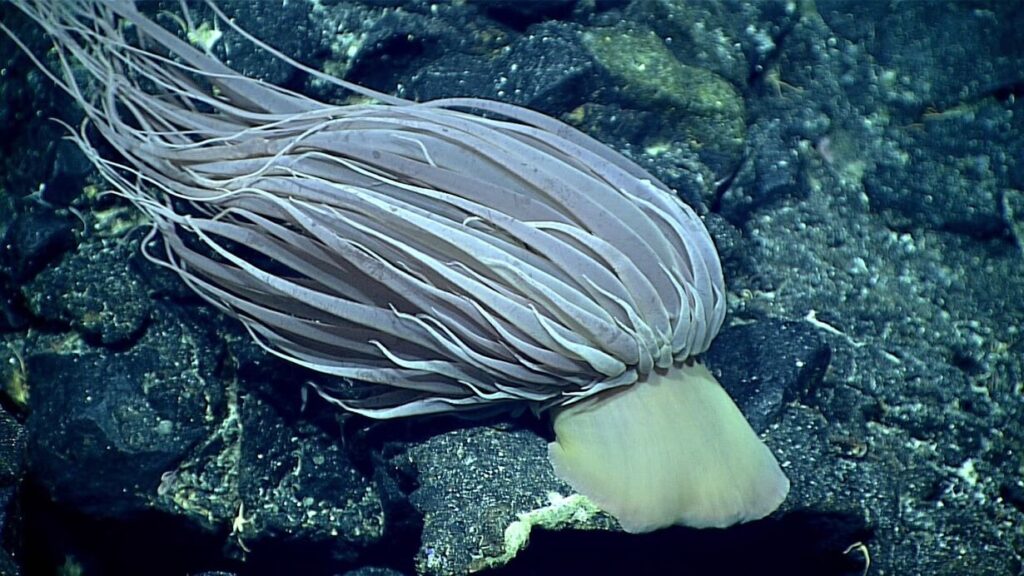
The orb has since been formally accessioned into the Invertebrate Zoology Collection at the Smithsonian Institution’s National Museum of Natural History, cataloged as USNM_IZ_1699903, where it is made publicly available.
CAPT William Mowitt, acting director of NOAA Ocean Exploration, said: “So often in deep ocean exploration, we find these captivating mysteries, like the ‘golden orb’. With advanced techniques like DNA sequencing, we are able to solve more and more of them.”
Mowitt noted that continued exploration helps researchers better understand how the ocean and its resources can drive economic growth, strengthen national security, and sustain the planet.
Live dives from the Okeanos Explorer are scheduled to resume in May with a shakedown expedition off Hawaii. The broader Seascape Alaska campaign aims to fully map United States waters off the Alaskan coast to support U.S. research and resource management. Allen Collins will discuss the golden orb and other expedition discoveries in a public webinar on April 30, 2026.